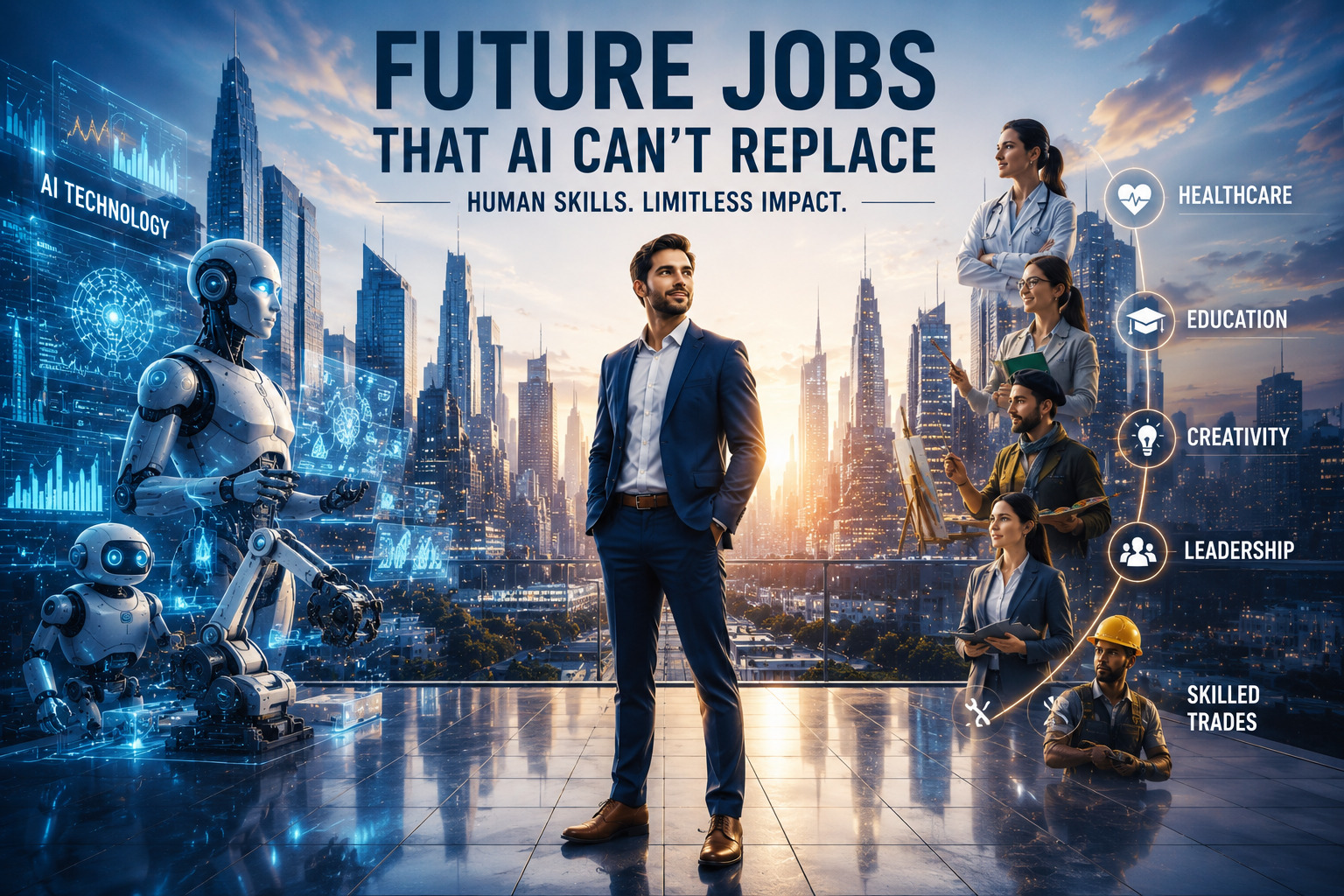
Future Jobs That AI Can’t Replace in 2026
Artificial Intelligence (AI) is changing the way we work. From writing content to analyzing data, AI tools are becoming more powerful every year. This has made many people wonder: Will AI replace all jobs in the future?
The simple answer is no.
While AI can automate repetitive tasks, there are certain jobs that require human emotions, creativity, critical thinking, and personal interaction. These qualities are difficult for machines to fully replicate.
In this article, we’ll explore the top future jobs that AI can’t replace and why they will continue to be important in the years ahead.
Why AI Can’t Replace Every Job
AI is excellent at processing information and performing routine tasks. However, it lacks:
- Human emotions
- Empathy and compassion
- Ethical judgment
- Complex decision-making
- Genuine creativity
- Personal relationships
Jobs that heavily depend on these skills are likely to remain in demand despite advancements in AI technology.
1. Healthcare Professionals
Doctors, nurses, therapists, and other healthcare workers provide care that goes beyond medical knowledge.
Patients often need emotional support, trust, and personalized treatment plans. While AI can assist with diagnosis and medical research, it cannot replace the human connection that healthcare professionals offer.
Why AI Can’t Replace Them
- Human empathy
- Patient communication
- Ethical decision-making
- Personalized care
2. Teachers and Educators
Technology can help students learn, but it cannot replace the role of a great teacher.
Teachers inspire, motivate, and guide students based on their individual needs. They understand emotions, learning styles, and social challenges that AI may not fully recognize.
Why AI Can’t Replace Them
- Emotional intelligence
- Mentorship
- Classroom management
- Personalized guidance
3. Psychologists and Counselors
Mental health professionals help people navigate emotional and psychological challenges.
AI chatbox can provide basic support, but they cannot fully understand human experiences or build deep therapeutic relationships.
Why AI Can’t Replace Them
- Human understanding
- Emotional connection
- Trust-building
- Professional judgment
4. Creative Professionals
Creativity is one of the most valuable human abilities.
Writers, designers, filmmakers, musicians, and artists use imagination, experiences, and emotions to create unique work. AI can assist in the creative process, but true originality still comes from humans.
Why AI Can’t Replace Them
- Original ideas
- Artistic vision
- Storytelling
- Emotional expression
5. Skilled Trades Workers
Electricians, plumbers, mechanics, and construction workers perform tasks that require physical skills and problem solving in unpredictable environments.
Even advanced robots struggle to handle the variety of situations these professionals face daily.
Why AI Can’t Replace Them
- Hands-on expertise
- Adaptability
- Real-world problem-solving
- Physical work
6. Business Leaders and Entrepreneurs
Successful business leaders make strategic decisions, manage teams, and adapt to changing market conditions.
AI can provide recommendations, but leadership requires vision, risk-taking, and human judgment.
Why AI Can’t Replace Them
- Strategic thinking
- Leadership skills
- Innovation
- Relationship building
7. Social Workers
Social workers help individuals and communities overcome challenges related to poverty, family issues, and mental health.
Their work involves compassion, understanding, and direct human interaction.
Why AI Can’t Replace Them
- Empathy
- Community engagement
- Human support
- Crisis intervention
8. Lawyers and Legal Advisors
AI can analyze legal documents quickly, but complex legal cases often require negotiation, advocacy, and ethical reasoning.
Clients also need personalized advice that considers unique circumstances.
Why AI Can’t Replace Them
- Critical thinking
- Negotiation skills
- Legal strategy
- Human judgment
9. Human Resource Managers
Hiring and managing employees involves understanding personalities, workplace culture, and team dynamics.
These human-focused tasks are difficult for AI to handle effectively.
Why AI Can’t Replace Them
- People management
- Conflict resolution
- Employee engagement
- Workplace culture development
10. Emergency Responders
Police officers, firefighters, and emergency medical teams often work in high-pressure situations where quick human decisions are essential.
AI can assist with information, but human courage and judgment remain irreplaceable.
Why AI Can’t Replace Them
- Rapid decision-making
- Physical response
- Emotional resilience
- Human leadership
Skills You Should Develop for the Future
If you want a career that remains valuable in the AI era, focus on developing these skills:
- Communication
- Critical thinking
- Creativity
- Emotional intelligence
- Leadership
- Problem-solving
- Adaptability
These skills are difficult to automate and will continue to be highly sought after by employers.
Conclusion
AI will undoubtedly transform many industries, but it is unlikely to replace jobs that rely heavily on human creativity, empathy, leadership, and complex decision-making.
Instead of fearing AI, people should focus on learning skills that complement technology. The future belongs to those who can combine human strengths with technological advancements.