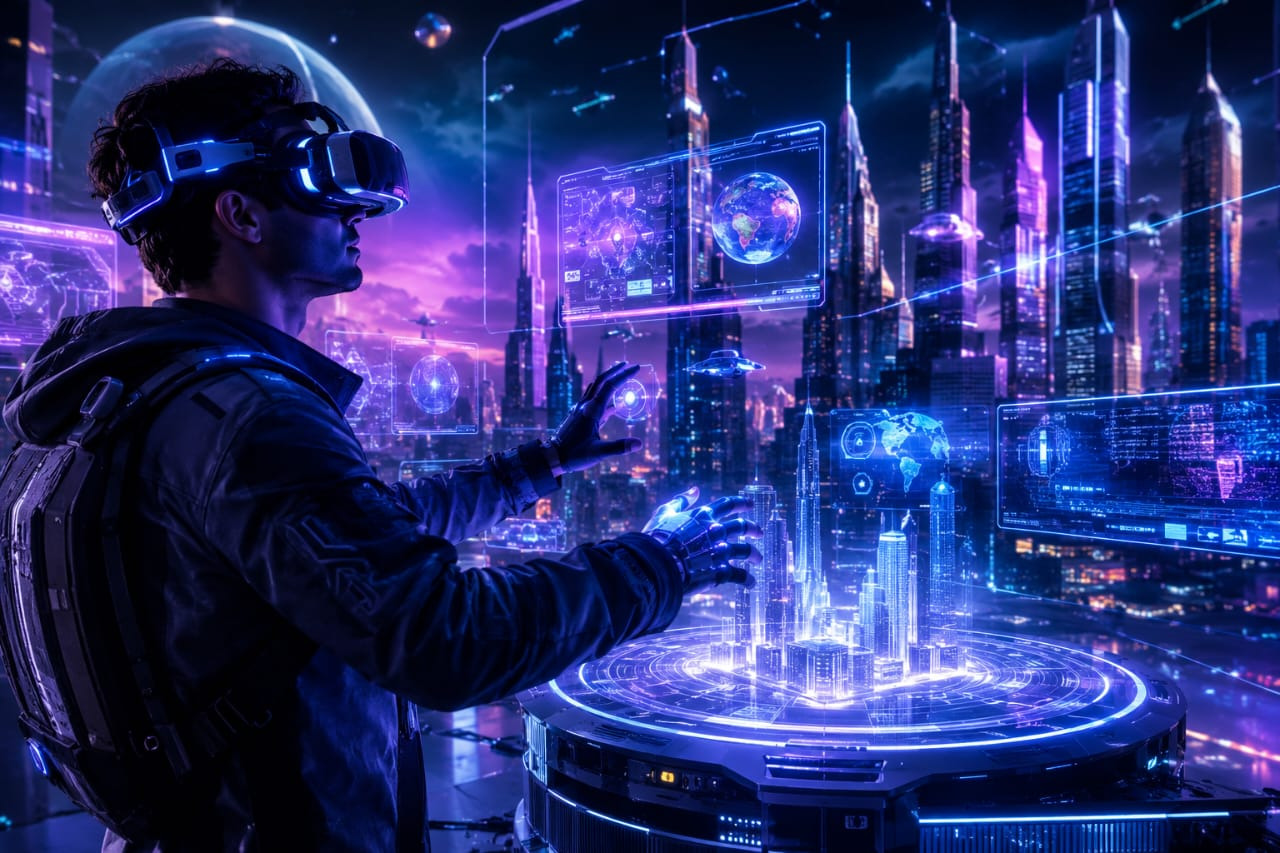
Introduction:
Have you ever imagined attending a class on the other side of the world, exploring ancient civilizations, or playing a game where you feel like you’re actually inside the action? Thanks to Virtual Reality (VR), these experiences are no longer just ideas from science fiction movies they are becoming reality.
Virtual Reality has come a long way from being a nice gaming technology. Today, it is helping people learn, work, communicate, and even receive medical treatment in new and innovative ways. As technology continues to improve, the future of VR looks brighter than ever.
What is Virtual Reality?
Virtual Reality is a technology that places users inside a computer-generated environment. By wearing a VR headset, people can look around, move, and interact with a virtual world as if they were physically there.
Unlike watching a video on a screen, VR makes you feel like part of the experience. This sense of immersion is what makes the technology so powerful and exciting.
Why is VR Becoming So Popular?
One of the biggest reasons behind VR’s growing popularity is its ability to create experiences that feel real. Whether it’s exploring a virtual city, learning a new skill, or collaborating with coworkers in a digital workspace, VR offers possibilities that traditional technology cannot.
As VR headsets become more affordable and powerful, more people are discovering how useful and entertaining the technology can be.
How VR Could Shape the Future:
1. Revolutionizing Education
Imagine learning about Ancient Egypt by virtually walking through the pyramids instead of simply reading about them in a textbook. VR can make education more engaging, interactive, and memorable.
Students can explore complex subjects through hands-on experiences, helping them understand concepts more effectively.
2. Transforming Healthcare
Healthcare is one of the most exciting areas for VR innovation. Doctors can practice procedures using realistic simulations, while patients can benefit from therapies designed to reduce anxiety and improve rehabilitation.
In the future, VR may become a standard tool in hospitals and medical schools around the world.
3. Changing the Way We Work
Remote work has become common, but video calls often lack the feeling of being together. Virtual Reality could solve this problem by creating virtual offices where team members interact as if they were sharing the same room.
This could make collaboration more natural and productive, regardless of location.
4. Taking Gaming to the Next Level
Gaming has always been one of the biggest drivers of VR technology. Future VR games will offer larger worlds, more realistic graphics, and deeper interactions.
Instead of controlling a character on a screen, players will feel like they are truly part of the adventure.
5. Creating New Social Experiences
VR is also changing how people connect with each other. Friends and family members from different countries can meet in virtual spaces, attend events together, and share experiences with their love ones after being miles apart.
As virtual worlds become more advanced, social interaction in VR may become a normal part of everyday life.
Benefits of Virtual Reality
– More engaging learning experiences
– Better professional training
– Improved healthcare solutions
– Enhanced entertainment and gaming
– Greater collaboration for remote teams
– New opportunities for social interaction
Conclusion:
Virtual Reality is more than just a trend it’s a technology that has the potential to reshape how we learn, work, play, and communicate. What once seemed impossible is quickly becoming part of everyday life.
While there are still challenges to overcome, the future of Virtual Reality is full of exciting possibilities. VR will become as common in our daily lives as smartphones are today.
The journey has only just begun, and the best VR experiences are likely still ahead of us.