Introduction:
Artificial Intelligence (AI) is evolving faster than ever. From chatbots that answer questions to tools that generate images and videos, AI has already transformed the way we work and learn. Now, a new concept called Agentic AI is gaining attention and is expected to play a major role in the future of technology.
But what exactly is Agentic AI, and why is everyone talking about it?
In this beginner-friendly guide, we’ll explain Agentic AI in simple terms, how it works, and how it may change our daily lives.
What Is Agentic AI?
Agentic AI refers to artificial intelligence systems that can make decisions, plan actions, and complete tasks with minimal human supervision.
Unlike traditional AI, which usually responds to specific commands, Agentic AI can understand goals, create plans, and take multiple steps to achieve desired outcomes.
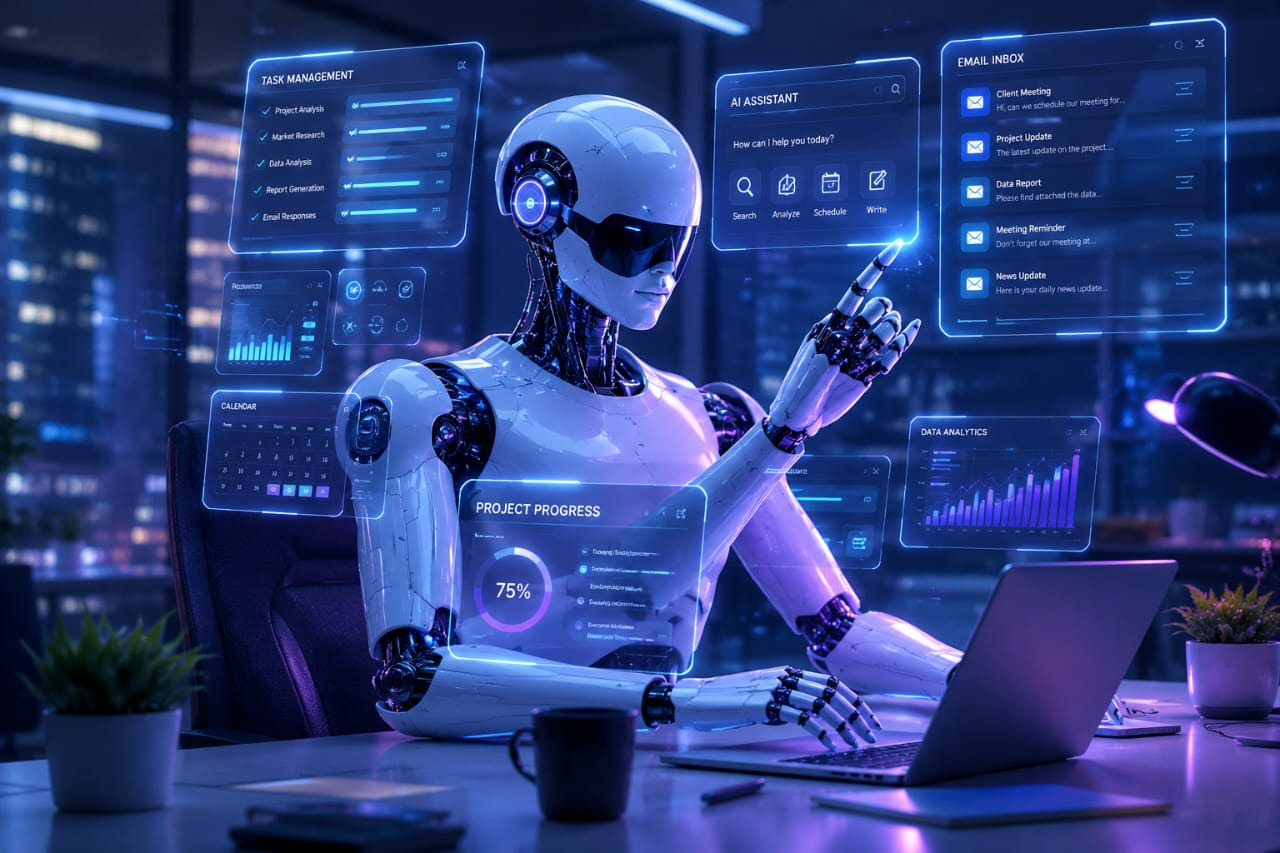
Think of it as the difference between a calculator and a personal assistant. A calculator only performs calculations when asked, while a personal assistant can organize tasks, schedule meetings, and manage activities independently.
How Does Agentic AI Work?
Agentic AI combines several advanced technologies, including:
– Machine Learning
– Natural Language Processing (NLP)
– Decision-Making Systems
– Automation Tools
– Memory and Context Awareness
These systems work together to help AI understand objectives and determine the best actions to achieve them.
For example, if you ask an Agentic AI system to plan a business trip, it may:
1. Search for flights.
2. Compare prices.
3. Book accommodations.
4. Create an itinerary.
5. Send reminders.
All of this can happen with very little human involvement.
Key Features of Agentic AI
Goal-Oriented Behavior
Agentic AI focuses on achieving goals rather than simply responding to commands.
Autonomous Decision-Making
It can evaluate options and choose the best course of action.
Multi-Step Task Execution
Agentic AI can complete complex tasks involving multiple actions.
Learning and Adaptation
Many systems improve over time by learning from interactions and outcomes.
Real-World Applications of Agentic AI
Business Automation
Companies can automate customer support, scheduling, reporting, and project management.
Healthcare
AI assistants may help doctors analyze data and manage administrative tasks.
Education
Students can receive personalized learning experiences and study plans.
Software Development
Agentic AI tools can assist developers by writing code, testing software, and fixing bugs.
Personal Productivity
Individuals can use AI agents to organize calendars, manage emails, and handle repetitive tasks.
Benefits of Agentic AI
– Saves time by automating routine work.
– Improves productivity.
– Reduces human error.
– Helps businesses scale operations.
– Provides personalized experiences.
As AI technology becomes more advanced, these benefits are expected to increase significantly.
Challenges and Concerns
While Agentic AI offers exciting opportunities, it also raises important concerns:
– Data privacy issues
– Security risks
– Ethical decision-making
– Dependence on automation
– Job market changes
Developers and policymakers will need to address these challenges to ensure responsible AI development.
The Future of Agentic AI
Many experts believe Agentic AI represents the next major step in artificial intelligence. Future AI agents may become capable of managing entire workflows, assisting businesses, and supporting everyday activities with greater independence.
Although the technology is still developing, its potential impact could be similar to the rise of smartphones and cloud computing.
Conclusion:
Agentic AI is changing the way people think about artificial intelligence. Instead of simply responding to commands, these systems can plan, make decisions, and complete tasks on behalf of users.
As technology continues to evolve, understanding Agentic AI will become increasingly important for students, professionals, and businesses alike. Whether you’re interested in technology or simply curious about the future, Agentic AI is a trend worth watching closely in 2026 and beyond.